In our latest episode, author Peter Blau discusses his book, Friction Science and Technology - From Concepts to Applications.
Peter goes over how the book came about, how it differs from other books on the subject, the topics included, the intended audience and its use - how to apply the concepts presented.
His thoughts on the future of the field: "I would hope that those who practice tribology will realize that it isn’t so much a single discipline as it is a set of multi-disciplinary problems that use whatever tools are appropriate in each case."
This quote makes sense, since the book itself is all about covering core concepts and applying those concepts to a variety of conditions.
As you may have guessed, space tribology is the application of tribology and lubrication principles in the space environment. The field addresses the reliable performance of machines in space, including satellites, spacecraft, and even the International Space Station (ISS). These instruments and structures require lubrication and it is a challenge to create lubricants that can handle this extreme environment.
Brandon Krick, a Ph.D. student who attends and works at the Tribology Lab at the University of Florida discusses space tribology and MISSE7, or the Materials on the International Space Station Experiments, 7th Mission. He was involved in the development and implementation of the MISSE7 and will handle the analysis of the experiments upon conclusion. He is shown here with one of the tribometers.
This experiment is being conducted with NASA's help, and addresses the use of solid lubricants in low earth orbit. The experiment is a test bed for materials and coatings attached to the outside of the ISS being evaluated for the effects of the space environment. The results of this experiment will provide a better understanding of the durability of various materials, thus providing information for applications in the design of future spacecraft. For more on the experiment and space tribology, you can download this week's episode, read the transcript, or listen directly from the slider bar above.
For more information on space tribology, MISSE7, Brandon, or his graduate advisor, Dr. Gregory Sawyer, you can visit our website, the University of Florida's Tribology Laboratory website, or NASA's page on MISSE7. You can also read the TLT article, "History's Ultimate Lube Job."
In this episode, we talk to Dr. Neil Canter, who runs his own consulting company, Chemical Solutions. Dr. Canter discusses his feature article in the latest issue of Tribology & Lubrication Technology.
There has been a struggle to define the words "green" and "sustainable" and there is no commonly agreed upon definition. Dr. Canter presents a definition and his argument for that definition. Instead of looking at a lubricant at the cradle and the grave, he argues for a look at the application and use of a lubricant, and labeling a lubricant "green" by what happens in process.
Find out more by clicking play on the slider bar, by downloading the episode, or by reading the transcript. Make sure you read the article, "What is 'Green?'" in this month's TLT magazine, which is available both in print and online. Peruse the digital version of TLT, which contains other articles and perspectives on what it means to be "green." You can visit our website for more news and information on the subject.
You can also learn more about the subject by attending the 2011 STLE Annual Meeting in Atlanta, Georgia. Dr. Canter is the Vice Chair of a full-day education course discussing bio-based lubricants and bio-based fuels. You can view the course synopsis for more information on the topics and format of the course on our webiste.
In this episode, Dr. Ian Clarke, Co-Director of the DARF Center, discusses the wear involved with hip and knee joint replacements, and his current work conducting wear analysis of metal-on-metal ("MOM") bearing implants that have failed in patients. His goal is to determine why this small percentage of implants have failed. Despite some issues with these "MOM" bearings, Dr. Clarke argues that the vast majority of implants are successful and result in improved quality of life.
As he gets to see and test implants from ten to fifteen years ago, this gives him an insight into what implants were designed and created then, the materials and composition being used, what works and what does not work. He is also testing implants that may be used in the future to ensure they have the longest life span. To the right, you can see the machine used to conduct wear analysis of a potential hip implant.
Dr. Clarke's unique point of view provides the most benefit to all those involved in the design of joint replacement technology - most important of all, the patient.
Essentially, this technology is one that provides a way to improve a patient's life, and is being refined through these types of studies to ensure the replacement is a successful and beneficial one for the patient.
You can download the episode, read the transcript, or just click play on the slider bar above. You can read more about the tribology of joint replacements by reading this article, or you can visit our website for more news and information on biotribology. You can also attend the 2011 STLE Annual Meeting, which has a biotribology technical track.
STLE University will be released next Wednesday, November 17, 2010. Considering your interest in the STLE Compass, you may be interested in STLE University.
So, what is STLE University? STLE U is your personalized, centralized location for continuing education in the field of tribology and lubrication engineering. We provide you with the latest education and information in the field, while providing opportunities for you to enhance your career that do not interfere with your daily life. Our education opportunities include our traditional in-person education courses as well as our all-new online education courses.
STLE University is Education Your Way: Focused. Flexible. Accessible.
FOCUSED: We offer a variety of courses that are designed for differing audiences. The courses vary based on content and topical area, basic to advanced levels, and audience segment encompassing the wide array of industrial segments, ensuring there is something for everyone.
FLEXIBLE: Courses are both in-person and online and are designed to fit around your schedule. If you need a short, introductory course or an in-depth course, chances are STLE has something to fit your needs. The variety of courses matches up with your available time commitment.
ACCESSIBLE: Both online and in-person courses are formatted to ensure you can attend something we offer. Our in-person education course locations change yearly, and our online options allow you to purchase a course at any time and start it immediately. Also, everyone is welcome! You do not need to be a member to attend our courses, however, members enjoy a significant discount.
STLE University: for all the ways you learn. Visit our website for more information. Classes are available starting November 17!
In this episode, we talk to Dr. Michael Dugger, Distinguished Technical Staff Member at Sandia National Laboratories. Dr. Dugger discusses nanotribology and MEMS (micro-electrical-mechanical systems). MEMS are small mechanical devices that are driven by, or have as their output, electrical signals.
According to Dr. Dugger, nanotribology is "the study of interactions of small collections of atoms involving relative motion between one group of atoms and another." Nanotribology is a key component of nanotechnology and its development. According to an article in TLT from January 2009, "a dozen nano products are commercially introduced each month-and lubrication issues are at the heart of nearly all of them." Lubrication at the nano scale is fundamentally different and requires a different approach because what works on the normal scale, may not work in an application at the nano scale.
Dr. Dugger is one of many working and researching in this area, attempting to discover what lubrication methods work best and how to apply this research to the use of MEMS. Here, you can see the scale of a typical friction device that is used at Sandia.
This episode takes another look at biotribology, focusing on the heart. In the interview we talk with Dr. Said Jahanmir, President and CEO of MiTiHeart Corporation. Dr. Jahanmir has specialized in this area of research, which focuses on patients with congestive heart failure (CHF). CHF refers to a situation where a patient's heart cannot pump enough blood to meet the body's needs, and it affects 4.5 million people annually. This population sometimes requires medical intervention, and a blood pump is one source of that assistance.
Tribology is a necessary requirement when designing, creating, and implanting devices that assist the heart. If these issues are not considered, the pump could have adverse effects on the blood, tissues and the heart.
One type of blood pump, called an LVAD or left ventricular assist device, is in development at MiTiHeart. Dr. Jahanmir addresses the design, testing and impact that this LVAD will have. In the picture, you can see the relative size and shape of the LVAD.
If you'd like to hear more, you can download the podcast, subscribe to get future episodes, or view the transcript. You can also continue the conversation by reading Dr. Jahanmir's article in TLT. The STLE website has many resources that you can use to find more information, including more on the biotribology technical tracks at both the International Joint Tribology Conference and the upcoming 2011 STLE Annual Meeting, as well as information on Dr. Jahanmir and his work at MiTiHeart.
In this interview, we talk with Dr. Donald Smolenski, Technical Fellow in Research & Development at General Motors. He has extensive experience in this field, including the development of industrial lubricant specifications, best fluid management practices, and recycling and disposal of oily water and used oil. We welcome that experience in our discussion of metalworking fluid management in this podcast. The episode delves into the field and addresses metal removal fluids including selection, in-use management, recycling and disposal of these fluids.
Click here to download the podcast, or click on the slider bar above to play it from this screen. You can also subscribe to get future podcasts delivered automatically. If you would like to translate the content or cannot hear the audio, you can view the transcript.
STLE's website has many resources on this topic, including more information on metalworking fluid management and metal removal fluids. Included for your reference is an article written by STLE's Director of Professional Development, Dr. Robert Gresham, who discusses this topic and recaps the last occurence of the Metalworking Fluid Management Certificate Course. You can also view the extended abstract from Dr. Smolenski's presentation at last year's Annual Meeting on "Cradle to Grave Management of Metal Removal Fluids."
Here and at our website, you can find information about the Metalworking Fluid Management Certificate Course, scheduled for November 2-4, 2010. The course will be held at the Engineering Society of Detroit's facility in Southfield, Michigan. You can see the flyer for more details and you can view the agenda for information on the timeline. Register today to get updated and in-depth information straight from the experts.
Starting this month, The STLE Compass will be released every second and fourth Tuesday of each month. You can now expect to see new episodes consistently, as we have more and more topics and interviewees.
We are very excited to provide you with new information on the subjects those in the field are researching and working on, and in the process, provide exposure to a variety and range of fields. Even if you aren't directly involved with a given field, you will be able to learn what other tribologists and lubrication engineers are working on, demonstrating the truly interdisciplinary nature of the field.
You can visit our website every second and fourth Tuesday, or you can subscribe to the blog to get each new release automatically.
Biotribology as a field has been defined as the study of friction, lubrication and wear in biological systems. In this field, there has been significant focus on joints, including the hip, with a large amount of research devoted to hip replacements. Biotribology as a field is more expansive and looks at any biological application, including structures like the heart and the eye. Today’s podcast addresses the field in general and ocular tribology specifically.
In the interview, we talk with Alison Dunn, a PhD candidate at the University of Florida, who has specialized in this area of research. Listen to find out more. You can subscribe to the Official STLE Podcast to get future podcasts automatically. If you'd like to read the interview, take a look at the transcript.
STLE’s website has many resources that you can search to find more information, including more on the 2010 International Joint Tribology Conference as well as information on Alison Dunn and Dr. Sawyer, their work, and Dr. Sawyer’s abstract for his IJTC keynote address. You can also visit the University of Florida’s Tribology Laboratory website for more information about their work and research. TLT, STLE's monthly member magazine, also has an article addressing biotribology, as well as an article that addresses this work specifically.
The topic for the podcast is wind energy, a growing field that needs input and research from tribologists and lubrication engineers. We talk to Dr. Robert Gresham about the topic. Dr. Gresham is the Director of Professional Development at STLE and is responsible for the education and certification programs there. He has organized and attended many technical sessions and written many articles on the subject of wind energy. In the podcast, he discusses the most important issues facing the field today, recent developments, what industry professionals are talking about and what they should be talking about.
STLE’s website, has many resources that you can search to find more information, including Dr. Gresham’s articles. The newest article on this topic was published in May, in STLE's monthly member magazine, Tribology Lubrication & Technology, and was titled, "Wind in the Willows." To view the latest articles, you can click on the link in the right hand panel, which will take you to the current digital issue of TLT.
Interested in more? Subscribe to the Official STLE Podcast to get future podcasts automatically or read the transcription.
The STLE Compass is searching for thoughts or ideas for future podcast topics. What topics do you want to listen to? What would you like to learn more about?
Tell us! We want to bring you the most up-to-date information that is relevant to you. If you have an idea for a topic you'd like us to cover, please send us an email at klemar@stle.org, call us at (847) 825-5536 or easiest of all, you can leave a comment below.
There are a number of ways that you can listen to the podcast and stay updated with The STLE Compass.
First, you can save the podcast to your desktop. You will start by right clicking on the link "Listen." Hit "Save Target As" and save it to the desired location on your computer. You can then listen with any media program you have on your computer.
Second, you have the option to subscribe to the podcast through an RSS feed. This option provides you with updates every time a new podcast is uploaded. Subscribing to the podcast ensures that each new episode is automatically delivered to your computer. If you already have a reader, you just need to find the link to your reader and click on it. Look to the top right hand corner of the website, where it says "Subscribe To This Blog." Under that title, there are two drop-down boxes. One is to subscribe to the posts, and the other is to subscribe to comments. If your reader is not listed, you should go to the link at the bottom of the page that says "Subscribe to: Posts (Atom)." You can then search for your provider.
If you do not have a reader, it still only takes three easy steps.
Step One: Find a feed reader that suits you. There are many different programs you can use including iTunes, FeedReader, and NewsGator (which integrates with Outlook). These are all available for free download. There are also web-based feed reader programs that you can use including Google Reader and My Yahoo. Of course, there are many more options and if you already have a feed reader, you are that much closer to our podcast.
Step Two: Once you have a reader, you are ready to subscribe to our podcast. At the bottom of the page, you will see text that says "Subscribe to: Posts (Atom)." Click on this link and a new window will open that will present you with different feed readers you can subscribe through. Also on this screen, you will find more in depth information on RSS feeds and feed readers.
Step Three: Find your provider's link (also called a chicklett) and click on it. There are different ways to subscribe since the readers are different, so you should follow the instructions for your reader.
If you have any issues or need assistance in signing up or accessing the podcast, feel free to contact us by email or phone. Contact information is available on our homepage. Also, please bear in mind if you have difficulties accessing the podcast, it may be due to security settings on your computer.


 In our latest episode, author Peter Blau discusses his book, Friction Science and Technology - From Concepts to Applications.


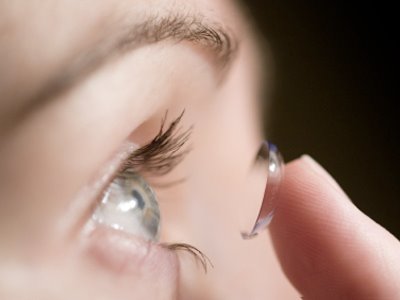
 In the interview, we talk with Alison Dunn, a PhD candidate at the University of Florida, who has specialized in this area of research.


